
"Caribbean coffee"
7000 article(s) found
Haitien coffee beans Haiti boutique coffee flavor introduction Caribbean Haitien coffee African sea
Good coffee from a politically troubled land Despite its well-known problems and fluctuating coffee quality, Haiti is still trying to produce some good coffee. Most of the coffee produced in Haiti is grown in a purely natural state, not intentionally but as a result of material shortages, because farmers are too poor to afford it.

Santo Domingo Coffee Introduction Santo Domingo
Santo Domingo is the capital of Dominica and the largest deep-water port in the country. Santo Domingo, the oldest city in the Southern Hemisphere, is located in the southern mouth of the Osama River into the Caribbean Sea. Santo Domingo's Urban area borders the Caribbean Sea and the Osama River. The caribbean sea is vast, and the osama estuary is wide and deep. Santo Domingo has wide streets, clean city appearance, green trees and numerous trees.
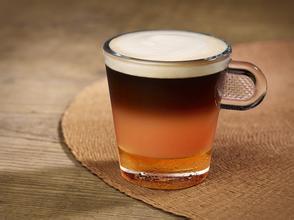
Cuban Crystal Mountain Coffee Island Coffee beans Special Coffee beans unique Caribbean flavor
Crystal Mountain Coffee comes from the Crystal Mountain of Cuba, so it is called Cuban Crystal Mountain Coffee. Crystal Mountain Coffee is synonymous with top Cuban coffee, because this area not only grows coffee, but also produces quartz, crystal and other precious minerals. A prominent feature of Crystal Mountain Coffee is its large granule and bright green color of coffee beans. Its flavor and taste characteristics: full granules, uniform taste

High quality Caribbean Coffee Blue Mountain Coffee rating how to drink Blue Mountain Coffee?
Professional coffee knowledge exchange more coffee bean information please follow the coffee workshop (Wechat official account cafe_style) Jamaican coffee beans have a long history. In 1728 the then British Governor Nicholas Lowe Sir Nicholas Lawes imported coffee from French Martinique Island to Jamaica. As the local climate is very suitable for growing coffee beans, buy it after nine years of introduction.

What kind of coffee does Blue Mountain Coffee belong to? the relationship between taste and brewing of Blue Mountain Coffee
Professional coffee knowledge exchange more coffee bean information please follow the coffee workshop (Wechat official account cafe_style) front street coffee-Jamaica Blue Mountain Coffee, brewing and sharing Jamaica is an island country in the Caribbean, located in the northwest of the Caribbean, is the third largest island in the Caribbean after Cuba and Haidi Island, and the capital Kingston is the seventh largest natural deep-water port in the world.

Cuban coffee Cubita Amber Coffee unique Caribbean flavor coffee
Professional coffee knowledge exchange more coffee bean information please follow the coffee workshop (Wechat official account cafe_style) Cuban coffee in 1748, coffee was introduced to Cuba from Domiga, since then Cuba began to grow coffee. As an important social tool, Cuban coffee is common in American coffee, but Cuban coffee with typical exotic island flavor is not really ancient.

Boutique coffee beans Cuban Crystal Mountain Coffee unique Caribbean flavor coffee
Crystal Mountain Coffee comes from the Crystal Mountain of Cuba, so it is called Cuban Crystal Mountain Coffee. Crystal Mountain Coffee is synonymous with top Cuban coffee, because this area not only grows coffee, but also produces quartz, crystal and other precious minerals. A prominent feature of Crystal Mountain Coffee is its large granule and bright green color of coffee beans. Its flavor and taste characteristics: full granules, uniform taste

Introduction to the geographical location and origin of Blue Mountain Coffee-Caribbean
The Blue Mountain Coffee of Jamaica is the most superior coffee in the world. The weather, geological structure and topography of Jamaica provide an ideal place. The ridge that runs through Jamaica extends to the eastern part of the island, with the Blue Mountains rising to more than 2100 meters. Cool weather, foggy, frequent precipitation, use this rich soil Rain Water to reconcile. In this case, mixing is used
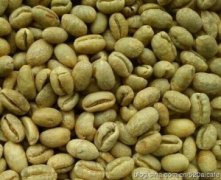
Caribbean Dominica Santo Domingo coffee beans
Flavor and taste characteristics: fresh and elegant, full particles, excellent acidity, pleasant aroma. The Dominican Republic is located in the east of the island of Haiti in the West Indies, bordering the Republic of Haiti to the west, the Atlantic Ocean to the north and the Caribbean Sea to the south. With an area of about 49000 square kilometers and a population of 7.1 million, the Dominican Republic and the Republic of Haiti coexist on an island bordering Haiti. Like its neighbors.
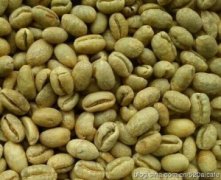
[coffee beans] Caribbean Dominica Santo Domingo coffee beans
Dominica Dominica: Santo Domingo coffee taste characteristics: fresh and elegant, full particles, excellent acidity, pleasant flavor. The Dominican Republic is located in the east of the island of Haiti in the West Indies, bordering the Republic of Haiti to the west, the Atlantic Ocean to the north and the Caribbean Sea to the south. With an area of about 49000 square kilometers and a population of 7.1 million, the Dominican Republic and the Republic of Haiti coexist in

The type and origin of coffee beans the origin of Blue Mountain coffee beans comes from the king of the Caribbean.
Professional coffee knowledge exchange more coffee bean information please follow the coffee workshop (Wechat official account cafe_style) front street-Jamaica Blue Mountain Coffee introduction to Jamaica, people will definitely think of Blue Mountain Coffee (Jamaica Blue Mountain), and indeed Jamaica Blue Mountain Coffee has indeed become synonymous with Jamaica. We absolutely believe that Jamaican Blue Mountain Coffee is the best coffee.

Introduction of Nicaraguan Coffee producing areas bordering the Pacific Ocean on the west and the Caribbean Sea on the east
Nicaraguan coffee Nicaragua coffee flavor characteristics: moderate acidity, fragrant and delicious. Nicaraguan coffee of high quality is in the forefront of coffee beans in the world and enjoys a good reputation. Its particles are moderate in size, mild in taste and very aromatic and mellow. Nicaragua is located in central Central America, bordered by the Pacific Ocean to the west and the Caribbean Sea to the east. The highlands in the north and the coastal plains in the east

Caribbean Coffee | Puerto Rico | San Pedro Manor San Pedro AA washing bourbon, tin
Professional coffee knowledge exchange more coffee bean information please follow the coffee workshop (Wechat official account cafe_style) Le Bihai Coffee | Puerto Rico | San Pedro San Pedro Manor AA washed bourbon, tin truck flavor? The whole history of coffee in the Caribbean has a lot to do with the reclamation of Spain. Coffee was not so important in the 18th century.

Elegant breath Jamaican Coffee Manor introduces Silver Mountain Manor Caribbean Coffee producing area
The weather, geological structure and topography of the Blue Mountains in Jamaica provide a unique ideal place. The cool climate in the mountains prolongs the maturity of coffee; in addition, the impact of the temperature difference between day and night can slow down the conversion of starch in coffee beans into sugar, thus increasing the rich aroma of coffee. And the Blue Mountain is very uneven, the process of harvesting is very difficult, and the harvest of coffee is almost finished.

Jamaica Blue Mountain Coffee introduces Valenford Manor in the Caribbean region of St. Thomas
The History of Blue Mountain Coffee in 1717 King Louis XV of France ordered coffee to be grown in Jamaica, and in the mid-1920s, the Governor of Jamaica, Nicholas. Nicholas Lawes imported Arabica seeds from Martinique and began to plant them in St. Andrew. To this day, the St. Andrews area

Coffee mellow Tour (XIII) Puerto Rican Coffee-the Pearl of the Caribbean
The Caribbean has beautiful scenery. Countless islands are scattered, like pearls, delicate beaches and pleasant climate, which is really a paradise for tourists. Of course, it is also a paradise for fine coffee! The blue mountains of Jamaica, the crystal mountains of Cuba, Dominica and other famous names in the coffee world tell coffee legends. And Puerto Rican coffee undoubtedly adds to the coffee legend here.

In the blue mountain coffee growing area above 1800 meters above sea level, Jamaica and the Caribbean
Only coffee grown in the Blue Mountain area above 1800 meters above sea level can be called Blue Mountain Coffee. A coffee enthusiast in the United States is even more demanding, insisting that the coffee grown at an altitude of 2256 meters is Blue Mountain coffee. Relatively speaking, the coffee with moderate altitude has the best quality. Specific altitude, air humidity, rainfall, light and other factors created the tripod.

Coffee bean producing area Caribbean boutique coffee beans Cuba (Cuba)
Cuba is famous for producing sugar, tobacco and coffee, which was introduced from Haiti by the French in the mid-18th century. According to the size of coffee beans, the grades are divided into ETL (Super), TL (Intermediate) and AL (ordinary). The coffee beans produced in Cuba are rich in texture and have a strong smoky taste. In Cuba, the cultivation of coffee is regulated by the state. The best coffee growing area in Cuba

Coffee Manor in Jamaica introduces the Caribbean region of Valenford Manor
When a British naval fleet arrived on the island of Jamaica in 1746, the fleet commander, the famous botanist Sir Matthew Forlan, inspected all kinds of plants on the island and bought a piece of land here, which is today's Valenford Coffee Manor. For nearly three hundred years since then, it has been growing the best Jamaican Blue Mountain coffee in the world. There is no need for the Blue Mountain, the national treasure of Jamaica.

Cuba Caribbean Coffee Bean Flavor Taste Aroma Description
Cubans usually treat coffee beans in two ways: sunning and washing. Solarization is the simplest, cheapest, and most traditional way to treat coffee. It involves drying the coffee fruit in the sun, but not fermenting it. The average drying time is about four weeks. The washing law allows the aroma of fruit to enter the coffee beans more, adding a rough fruit aroma to the coffee. Currently,